

Getting Started
What is emulation?
Emulation is the process of mimicking the behavior of one system on another. In the context of gaming, this often means running games designed for one platform (like a console) on a different platform (like a PC).
This can be useful for a variety of reasons, such as preserving old games that may no longer be available, or allowing you to play games on hardware that you don't have access to (especially retro consoles, which can be hard to find or very expensive today).
The end product of emulation is a software program called an emulator, which you can download and run on your computer. Emulators work by replicating the hardware and software of the original system, allowing you to run games as if you were using the original console.
Who is creating emulators?
Creating emulators is a incredibly complex task that requires a deep understanding of both the original hardware and software, as well as strong programming skills to replicate that behavior on a different platform.
Developers who create emulators are among the most skilled engineers in the world, and they often work tirelessly to create accurate and efficient emulators for a wide range of systems.
Most importantly, 99% of the time, these developers are doing this work for free, releasing their emulators as open source software for anyone to use and contribute to.
So whenever you use an emulator, remember that you're benefiting from the hard work and dedication of these talented developers who are passionate about preserving gaming history and making it accessible to everyone.
Be sure to support their work by spreading the word about their emulators, contributing to their projects if you have the skills, and respecting their efforts by using their emulators responsibly.
Or simply, thank them! 😄
Legal considerations
If you're new to emulation, it's important to understand the legal landscape surrounding it.
Generally speaking, emulation itself is a legal process. You have all the rights to create and use emulators that mimic the behavior of original hardware (even if that hardware is still being sold).
However, there are some important legal considerations to keep in mind:
- ROMs and ISOs: These are the game files that emulators run. Downloading or sharing ROMs and ISOs of games you do not own is illegal in many jurisdictions, as it constitutes copyright infringement. Video games are pieces of art, thus protected by copyright law, and downloading them without permission from the copyright holder is considered piracy.
- BIOS, drivers and firmware: Some emulators require you to obtain and use the original BIOS, drivers, or firmware from the console. These files contain proprietary code that is protected by copyright law, and using them without permission may also be illegal.
So even though emulation itself is mostly legal, the way you obtain and use the necessary files to run games can have legal implications. Always make sure to respect copyright laws and only use emulators and game files in a legal and responsible manner.
"Where's the download link?! 😡"
When navigating the world of emulation (and this guide makes no exception), you may encounter links to platforms like GitHub or Gitlab, which are popular platforms for hosting open source software projects, including emulators.
They can be a bit intimidating at first, as they are designed for developers and mainly highlight the source code or other technical details.
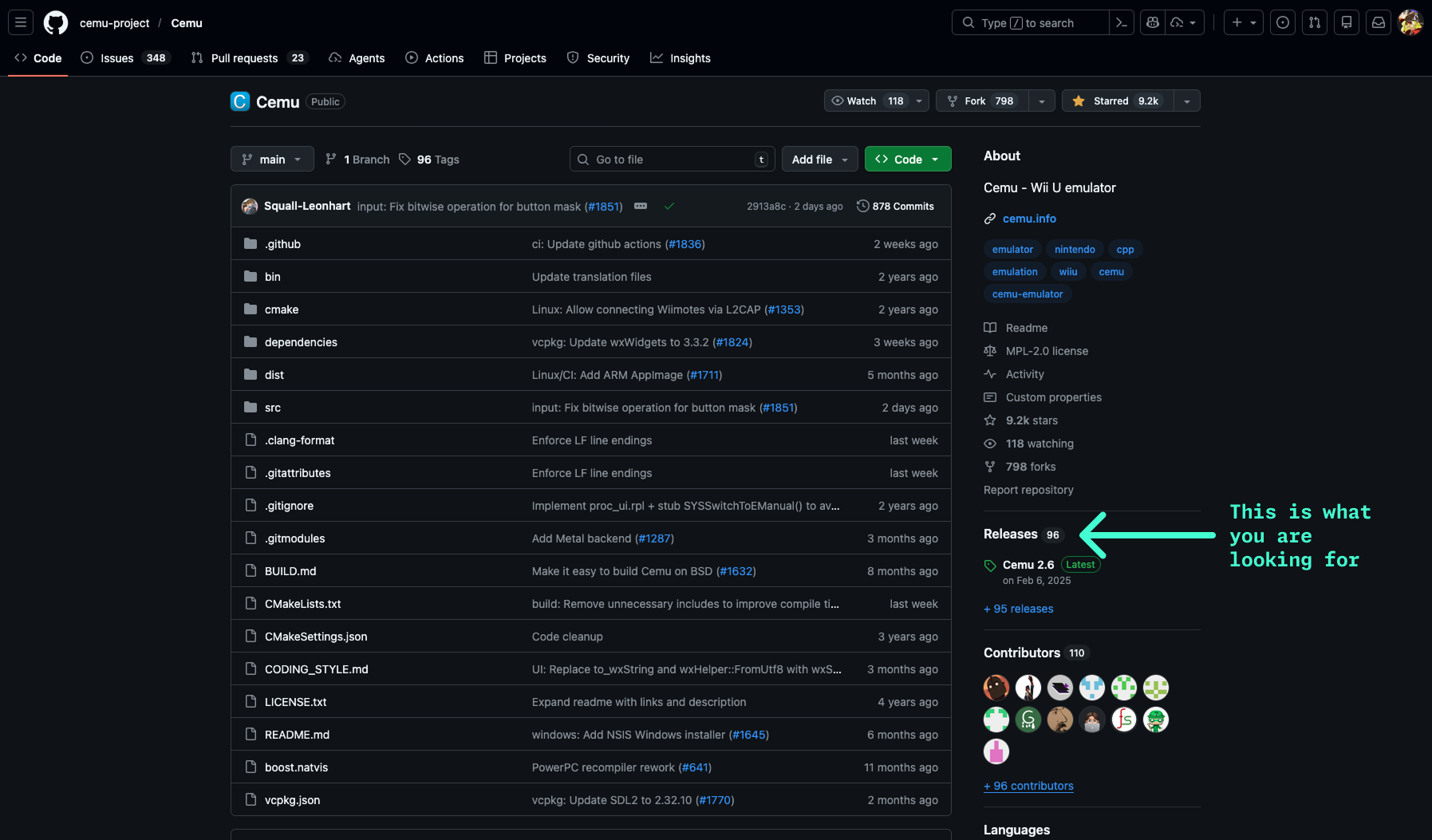
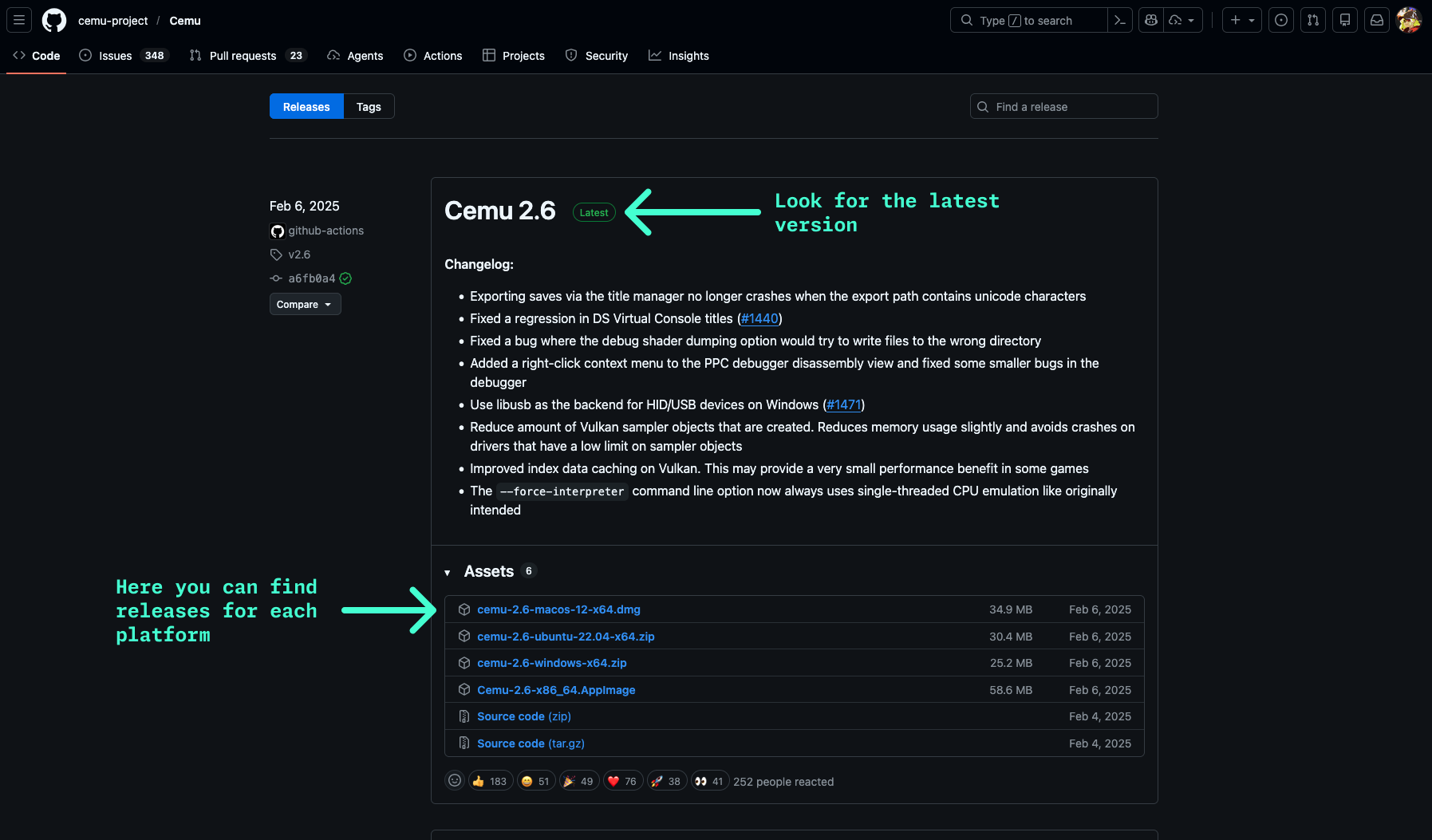
But most of the time, you can find a "Releases" section on the project's page, where the final product is packaged and made available for download.
Here's an example with Cemu on Github:
Next steps
Now that you have a basic understanding of what emulation is and the legal considerations involved, you're ready to dive deeper into the world of emulators.
Click on the next guide to learn about the different types of emulators and how to choose the right one for you!